


At the Berlin Conference of 1884-85, the leaders of 13 European nations and the United States met to discuss the partitioning of Africa and control of its resources. The “Scramble for Africa”, as it is called, led to the colonization of nearly the whole of Africa and the country borders that we know today. This period of European aggression and occupation would last nearly 100 years, until widespread African liberation movements wrestled control from the colonial rulers.

Today, Independence Day is celebrated across the continent to symbolize the determination of African people to free themselves from foreign domination and exploitation. The official date of independence is a national holiday in most countries, commemorated by military parades, fireworks, cultural and musical performances, and unofficial concerts, parties, and other events. If you happen to be traveling during this time, you’ll find the mood festive and jovial….in other words, LIT! So you don’t miss out on the fun, here’s a monthly list of African Independence Days.
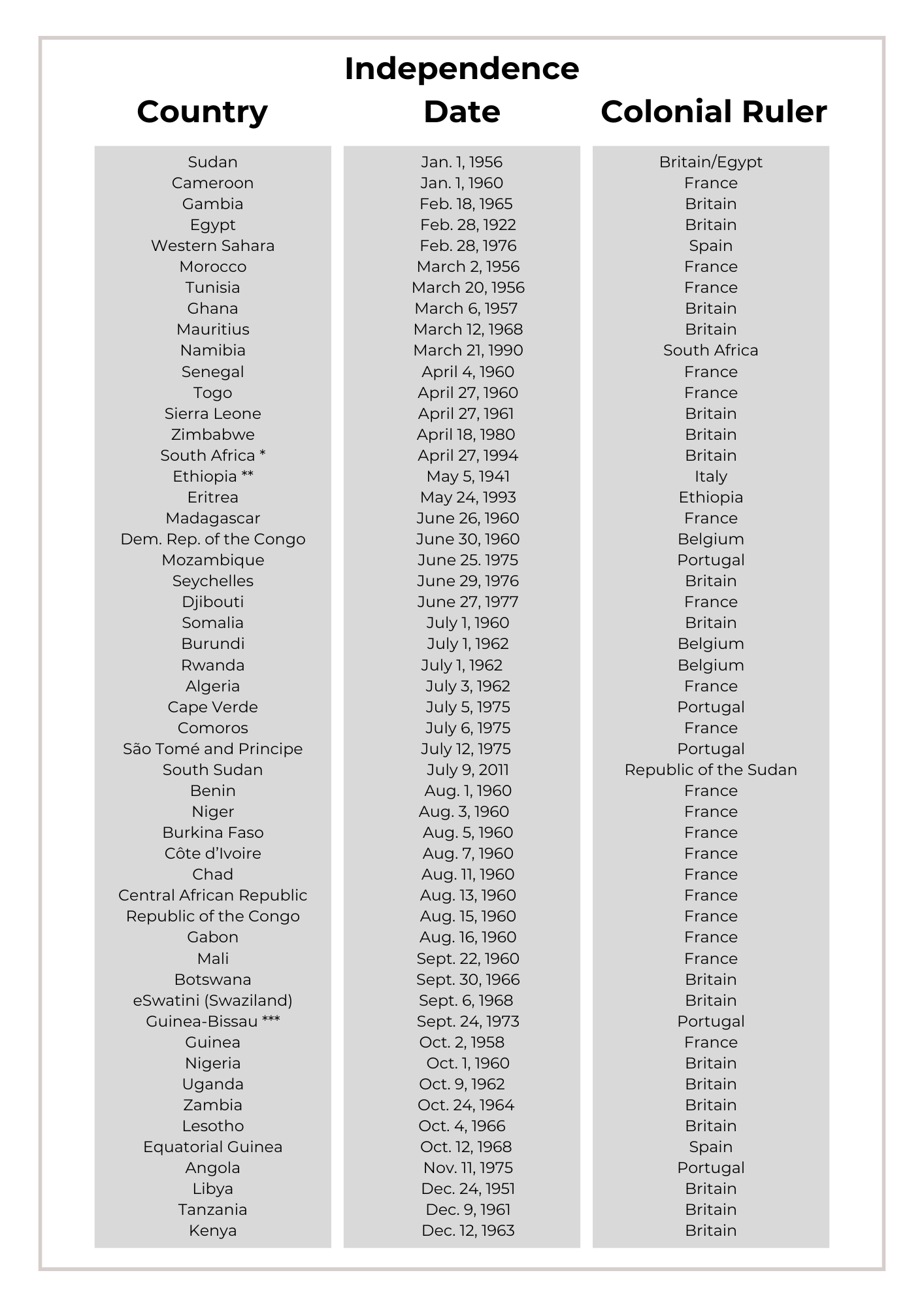
* South Africa formally achieved its independence from Britain on May 31, 1910. However, it celebrates the end of apartheid and the day the first democratic elections were held on April 27, 1994. The Day is known as Freedom Day.
** Ethiopia is generally considered to have never been colonized. After it was invaded by Italy in 1935, Emperor Haile Selassie was deposed and went into exile in the United Kingdom. He regained his throne on May 5, 1941 and Ethiopia was completely liberated from Italian occupation on November 27, 1941.
*** Guinea-Bissau made a Unilateral Declaration of Independence on September 24, 1973, which is celebrated as Independence Day. However, Portugal recognizes independence as September 10, 1974, as a result of the Algiers Accord.
Video credit: Kwaku Mike
Video credit: Lifestyle by Janet
Video credit: memoriesofrhodesia
0 Comment